Welcome to Shandong Junzheng Chemical Technology Co., Ltd.











Why daily chemicals reformulation often takes longer than expected
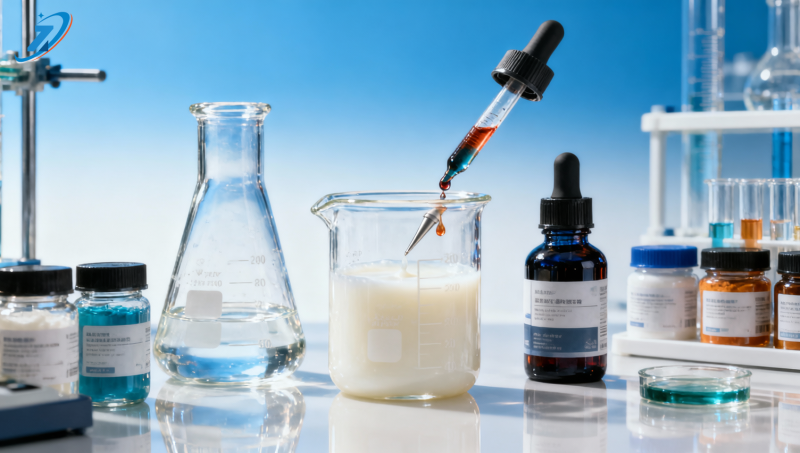
Daily chemicals reformulation often takes longer than expected because every change can affect performance, compliance, stability, and sourcing at the same time. From selecting suitable Additives and Organic Raw Material to balancing Dyestuffs And Pigments for appearance and consistency, each step requires testing and adjustment. For researchers, operators, technical evaluators, and procurement teams, understanding these hidden variables is essential to making better decisions in Daily Chemicals development.
In practice, reformulation rarely means replacing one ingredient with another on a one-to-one basis. A surfactant shift in a shampoo, a preservative update in a lotion, or a pigment adjustment in a detergent can trigger changes in viscosity, foaming, odor, compatibility, filling behavior, and shelf stability. What looks like a simple product update on paper often becomes a multi-stage technical and commercial project.
For B2B teams in the chemical industry, the delay is not only a laboratory issue. It also touches raw material qualification, packaging interaction, production line settings, regulatory review, and supplier lead times. That is why a realistic timeline for daily chemicals reformulation may range from 6 weeks for a minor adjustment to 6 months or more for a formula with multiple performance and compliance constraints.
Why one formulation change creates multiple technical consequences
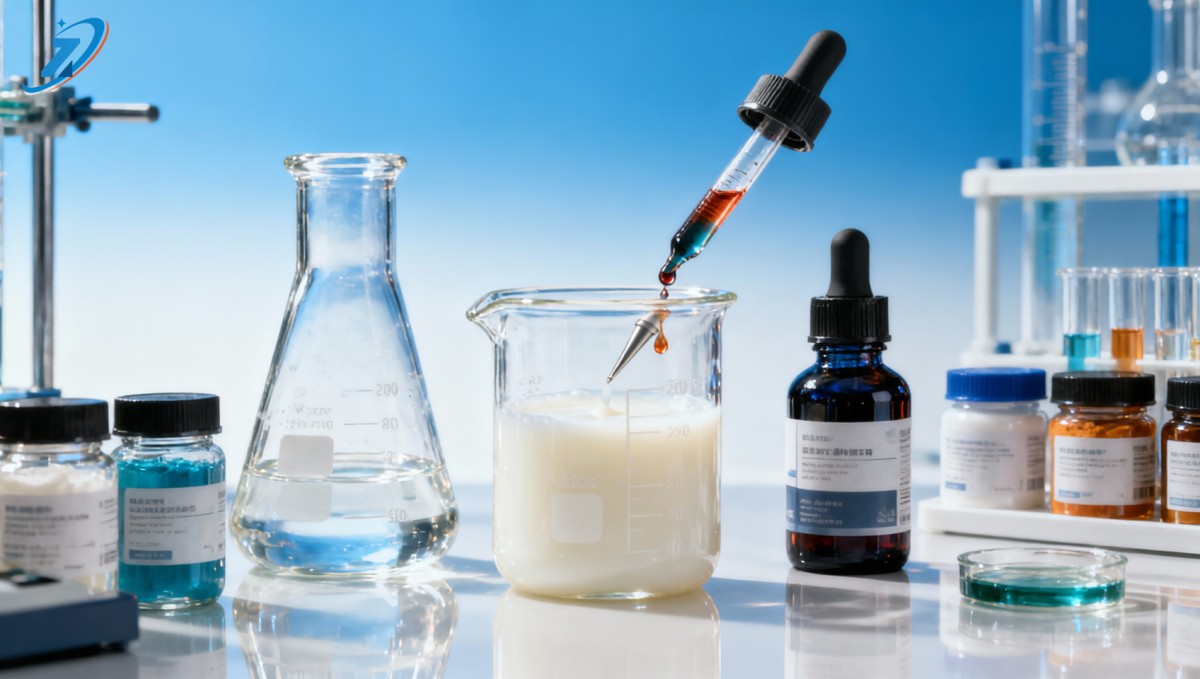
Daily chemical products are complex systems rather than simple mixtures. In a hand wash, fabric softener, body wash, or cleaning liquid, each ingredient plays at least 2 to 4 roles. A thickener affects not only viscosity but also clarity, pumpability, and low-temperature behavior. A fragrance can influence solubility and preservation efficiency. Because of this interdependence, reformulation timelines often stretch beyond initial expectations.
A common source of delay is compatibility testing. When Additives or Organic Raw Material are replaced, the new material may have a different active content, pH contribution, electrolyte sensitivity, or impurity profile. Even if the specification sheet looks similar, the finished formula may separate after 7 days, lose color consistency after 30 days, or drift outside the target viscosity range of 2,000–5,000 mPa·s.
Appearance control also adds time. Dyestuffs And Pigments must match not only color but also dispersion, light stability, and batch-to-batch consistency. A colorant that works in a transparent gel may perform poorly in an opaque cream. In some systems, as little as a 0.05% to 0.2% change in pigment level can alter visual acceptance or sedimentation behavior.
Operators and technical evaluators often discover that bench-scale success does not guarantee plant-scale success. A formula stable in a 1 kg beaker may respond differently in a 1,000 L mixing tank because of shear rate, mixing order, heating time, or deaeration conditions. This is why pilot validation usually adds another 1–3 weeks before a reformulated product is ready for full production review.
Typical chain reaction after a raw material change
- Primary performance shifts, such as foam volume, detergency, spreading, or softness.
- Secondary property changes, including viscosity, phase stability, color shade, and odor profile.
- Process impacts, such as mixing time increasing from 20 minutes to 35 minutes or requiring different temperature control.
- Packaging interactions, including stress cracking, label staining, or cap sealing issues during storage.
The table below shows why a single substitution in daily chemicals can lead to several additional validation tasks rather than one direct approval step.
The key takeaway is that reformulation delays are usually cumulative. One technical change creates 3 or 4 downstream checks, and each check can uncover another adjustment point. That cascading effect is the main reason timelines expand.
Compliance, safety, and documentation can extend the schedule
Many teams underestimate the documentation burden linked to daily chemicals reformulation. Even when a new ingredient is technically suitable, its use level, labeling implications, restricted substance profile, and regional compliance status must be reviewed. For products sold across 2 or 3 markets, one formula update can trigger separate document checks for each destination.
This review is especially important when switching Organic Raw Material suppliers. Two grades with similar names may differ in residual solvents, color index, trace impurities, or preservative carryover. Procurement teams often focus on price and lead time, but technical evaluators must confirm whether the alternate source can meet specification windows consistently over at least 3 trial batches.
Safety and stability work also consume time. A revised formula may require accelerated aging for 4–12 weeks, freeze-thaw testing over 3–5 cycles, or packaging compatibility checks under elevated temperature. If the product is prone to fragrance fading or phase drift, the lab may need to repeat the study with minor pH or chelating adjustments before release.
From an operational viewpoint, documentation delays can stop production decisions even after the lab formula performs well. Missing supplier declarations, incomplete COA consistency, or unclear impurity data may postpone approval by 1–2 weeks. For purchasing teams, this means that sourcing alternatives should be screened in parallel with formulation work, not after the formula is finalized.
Compliance checkpoints that frequently slow projects
- Verification of ingredient acceptability in target sales regions.
- Review of impurity limits, allergen disclosure, and specification tolerances.
- Assessment of preservative effectiveness and microbial risk after composition changes.
- Packaging contact compatibility and storage behavior over projected shelf life.
The table below outlines common validation steps and the time they can add to a reformulation program in the chemical sector.
When these steps are planned sequentially instead of in parallel, delays multiply quickly. A project expected to take 30 days can easily move to 60–90 days if compliance and supplier readiness are discovered late.
Raw material sourcing is often the hidden bottleneck
Sourcing is one of the least visible reasons why daily chemicals reformulation takes longer than expected. Even after the laboratory identifies a technically acceptable material, procurement may still face MOQ limits, long international lead times, inconsistent batch color, or incomplete quality documents. In volatile supply conditions, an ingredient with a quoted lead time of 2 weeks can become a 6–8 week constraint.
This issue is common for specialty Additives, mild surfactants, selected Organic Raw Material, and customized color systems. Some alternatives are available only in industrial grades that require extra purification review or process adaptation. Others have acceptable cost but poor continuity, which creates long-term risk for purchasing teams responsible for stable supply over 6 to 12 months.
Technical evaluators should therefore assess materials using more than a price-per-kilogram metric. At minimum, they should compare 4 dimensions: formulation fit, supply stability, documentation completeness, and process impact. A lower-priced material can become more expensive if it requires longer mixing, additional defoaming, or tighter storage control.
Operators are also affected. A reformulated detergent or personal care base may need a different charging sequence, hydration time, or temperature window. If a powder additive now needs 25 minutes to disperse instead of 10 minutes, the production schedule changes. That production impact should be reviewed before procurement locks in the source.
Procurement checks that should happen before formula approval
- Confirm whether the supplier can support at least 2 or 3 consecutive commercial batches with consistent specification.
- Review MOQ, standard lead time, and emergency replenishment options for critical ingredients.
- Check whether COA ranges match lab-tested samples, especially for color, moisture, active content, and pH.
- Evaluate packaging format, storage sensitivity, and handling needs at the production site.
A practical sourcing decision framework
A useful approach is to create a weighted matrix before final reformulation sign-off. For example, technical fit can carry 35%, supply continuity 30%, document readiness 20%, and total landed cost 15%. This prevents teams from approving a chemically suitable raw material that later fails commercial execution.
In many reformulation projects, the delay is not caused by chemistry alone but by late alignment between R&D, operations, and purchasing. Cross-functional review at week 2 or week 3 can reduce rework significantly compared with waiting until scale-up.
Testing stages that cannot be skipped in daily chemicals development
A realistic reformulation process usually involves at least 5 stages: screening, bench optimization, stability testing, pilot trial, and pre-launch approval. Skipping one stage may save a few days in the short term, but it often creates larger losses later through complaints, returns, or batch rejection. In chemical manufacturing, speed without validation is usually more expensive.
Bench optimization often takes longer than expected because formula targets must be balanced, not maximized individually. A team may improve foam by 15%, only to reduce clarity or thicken too strongly. Or it may match the target color using Dyestuffs And Pigments, only to find that the adjusted system fades after exposure to heat or light. These trade-offs require iterative work, often across 3 to 8 lab rounds.
Stability testing is equally important. Daily chemicals are commonly checked under ambient conditions, low temperature, elevated temperature, and freeze-thaw cycles. Typical checkpoints may include appearance, odor, pH, viscosity, and phase behavior at day 0, day 7, day 14, day 30, and day 60. For emulsions and suspensions, this timeline is often the minimum needed to detect meaningful drift.
Pilot trials then reveal process-related issues. Shear-sensitive thickeners, air entrapment, filling weight variation, and pumpability often appear only at production scale. If the plant trial fails, the team may need to return to the lab for process-oriented adjustments, adding another 2–4 weeks. This loop is common and should be expected rather than treated as an exception.
Recommended stage-gate workflow
- Define target profile: performance, appearance, pH range, viscosity range, and cost ceiling.
- Screen 2–5 raw material options for each critical function, not just one substitute.
- Run bench tests with controlled variables such as order of addition and mixing speed.
- Launch accelerated and real-time stability checks before plant booking.
- Conduct pilot production and release only after technical and sourcing review align.
The table below provides a useful reference for matching testing activities to project stage and decision purpose.
The conclusion is straightforward: the longer timeline is usually the cost of reducing risk. In daily chemicals development, robust testing protects both brand performance and procurement reliability.
How research, operations, technical review, and procurement can shorten reformulation time
The most effective way to reduce reformulation delays is cross-functional planning from the beginning. Researchers should not work alone until a near-final formula exists. Operators need early visibility on process changes, technical evaluators need clear test criteria, and procurement teams need time to qualify suppliers. When these groups align during the first 2 weeks, many avoidable loops disappear.
A practical model is to set a shared project brief with 5 fixed elements: target performance, compliance boundaries, acceptable raw material ranges, scale-up conditions, and sourcing constraints. This creates a realistic decision framework. For example, if a formula must remain between pH 5.5 and 6.5, use no more than 3 key supplier changes, and stay within a specific cost band, the lab can optimize more efficiently.
Teams should also define decision deadlines. If a material fails color stability after 14 days, replace it immediately instead of extending evaluation indefinitely. If a supplier cannot provide required technical documents within 5 working days, move to a backup source. Structured stop-loss rules save time and reduce project drift.
For procurement managers, supplier engagement should include more than quotation. Ask about typical batch variation, reserve inventory policy, alternate manufacturing sites, and support for urgent samples. For operators, request processing guides such as temperature range, mixing order, recommended dispersion time, and storage conditions. These details often determine whether a reformulated product is commercially practical.
Common mistakes that make reformulation slower
- Approving a substitute based only on datasheet similarity without running full compatibility checks.
- Waiting until the formula is finalized before reviewing supplier documents and MOQ conditions.
- Ignoring production scale variables such as shear, heating time, and filling speed.
- Treating color matching as a final cosmetic step instead of a stability-sensitive formulation factor.
FAQ: questions often asked during daily chemicals reformulation
How long does a typical reformulation project take?
For a minor raw material replacement with low compliance impact, 6–10 weeks is common. For a broader change involving surfactants, Additives, color systems, and packaging review, 3–6 months is more realistic. The exact duration depends on the number of variables changed at the same time.
Which materials usually create the most delays?
High-impact ingredients include surfactants, preservatives, specialty thickeners, fragrance systems, and Dyestuffs And Pigments. These materials affect multiple properties at once, so they often need more rounds of compatibility, stability, and scale-up testing than basic fillers or solvents.
What should procurement look at before approving an alternate source?
At minimum, review specification consistency, MOQ, lead time, emergency supply options, and supporting documentation. If possible, compare at least 2 suppliers and test 3 batch samples to confirm that the approved raw material is not only cheaper but also stable in ongoing production.
Daily chemicals reformulation takes longer than expected because formulation science, compliance review, production reality, and sourcing strategy are tightly linked. A small change in Additives, Organic Raw Material, or Dyestuffs And Pigments can trigger weeks of extra work if teams do not plan for compatibility, stability, and supply continuity early.
For researchers, operators, technical evaluators, and procurement professionals, the best results come from structured testing, early supplier qualification, and clear stage-gate decisions. If you are evaluating a reformulation project in the chemical industry and need help with raw material selection, process assessment, or sourcing coordination, contact us now to discuss your requirements, get a tailored solution, and explore more practical options for Daily Chemicals development.