Welcome to Shandong Junzheng Chemical Technology Co., Ltd.











What causes poor dispersion in pigments even after fine grinding?
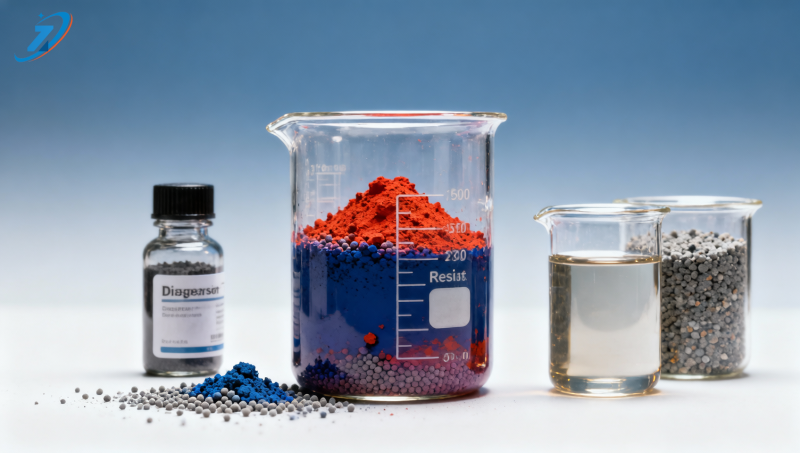
Poor dispersion in pigments even after fine grinding usually means the problem is not grinding intensity alone. In most cases, the root cause lies in poor wetting, unsuitable dispersants, resin or system incompatibility, unstable surface chemistry, or process conditions that allow particles to re-agglomerate after size reduction. For formulators, operators, technical evaluators, and buyers, the key question is not “How fine was the grind?” but “Why are the particles failing to remain separated in the final system?”
Pigment dispersion quality directly affects color strength, gloss, viscosity, storage stability, hiding power, and downstream processing. In applications ranging from coatings and inks to plastics and daily chemicals, a fine particle size can still deliver disappointing results if the pigment surface is not properly stabilized. Understanding the actual cause helps teams avoid wasted milling time, repeated batch corrections, and poor purchasing decisions.
Why fine grinding alone does not guarantee good pigment dispersion
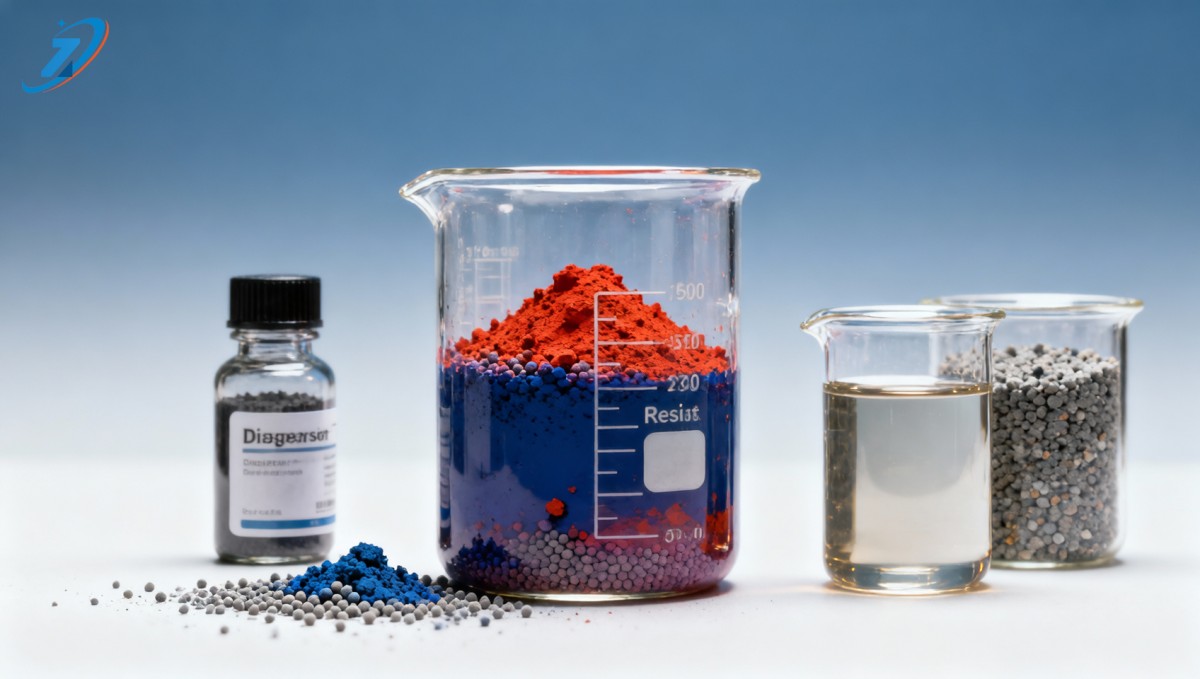
Fine grinding reduces agglomerate size, but dispersion is a broader process with three essential stages: wetting, deagglomeration, and stabilization. Grinding mainly improves the second stage. If wetting is incomplete or stabilization is weak, the pigment particles can quickly flocculate again, making the final dispersion appear poor even though the grind gauge looks acceptable.
This is why two batches with similar fineness can perform very differently in viscosity, gloss, color development, and storage stability. In practice, poor dispersion after fine grinding often indicates that the system is fighting against the pigment surface rather than controlling it.
What are the most common root causes of poor pigment dispersion?
1. Inadequate wetting of the pigment surface
Many pigments, especially organic pigments and some dyestuffs and pigments used in demanding formulations, have surfaces that are difficult to wet. If the liquid medium cannot properly penetrate pigment agglomerates, grinding energy is used inefficiently. The particles may be mechanically reduced for a short time, but they remain prone to regrouping.
2. Wrong dispersant or additive selection
Additives are often the deciding factor in dispersion stability. A dispersant that works well in one resin, solvent, or water-based system may fail in another. Incorrect molecular structure, insufficient dosage, or poor compatibility with the binder can all result in weak steric or electrostatic stabilization.
3. Pigment-resin incompatibility
A pigment can be finely ground yet still interact poorly with the resin or formulation base. This is common when the surface treatment of the pigment does not match the polarity of the system. The result may be flooding, floating, low color strength, hard settling, or rapid viscosity drift.
4. Re-agglomeration after milling
Even when grinding breaks down agglomerates effectively, particles can come back together if stabilization is not maintained. This often happens during let-down, storage, pumping, filtration, or temperature changes. Operators may assume the mill is underperforming, when the real issue is post-grinding instability.
5. Poor raw material consistency
Organic raw material quality matters. Variations in pigment manufacturing, crystal form, moisture, particle surface treatment, salt content, or impurities can strongly affect dispersion behavior. Two materials with the same color index may not disperse equally in production.
6. Incorrect process conditions
Dispersion is also sensitive to process order, shear level, temperature, pH, solids content, and residence time. Overgrinding can damage some systems, while under-dosing additives before pigment incorporation can make wetting harder from the start.
How do formulation factors affect pigment dispersion in real applications?
Formulation context matters as much as pigment choice. In daily chemicals, coatings, inks, and related chemical products, the same pigment may behave very differently depending on surfactants, thickeners, solvents, oils, binders, and active ingredients.
For example, a dispersant chosen for maximum color strength may create foam, instability, or viscosity issues in another system. A water-based formulation may need different surface-active support than a solvent-based one. High-polarity systems may wet some pigment surfaces well but destabilize others. In personal care or daily chemicals applications, requirements such as mildness, transparency, texture, and regulatory acceptability may further limit additive choices.
This is why technical teams should evaluate dispersion as a full system property, not just as a pigment property.
What signs show that the real problem is dispersion stability rather than particle size?
If a batch passes fineness testing but still performs poorly, the following signs often point to deeper dispersion issues:
- Low color strength despite acceptable grind fineness
- Unexpected viscosity increase or instability over time
- Poor gloss or haze in the final film
- Hard settling, sedimentation, or poor redispersion
- Flooding and floating in mixed pigment systems
- Filter blockage or poor transfer during processing
- Shade drift between fresh and stored batches
- Performance differences between lab and production scale
These symptoms often mean that the pigment particles are no longer staying uniformly separated in the application medium.
How can operators and formulators troubleshoot poor pigment dispersion efficiently?
A practical troubleshooting approach should move from surface interaction to process design:
Check wetting first. Review whether the pigment is being added under conditions that allow full media penetration. Premix quality often determines downstream success.
Review dispersant type and dosage. Do not assume more additive is always better. Under-dosing can leave surfaces unprotected, while over-dosing can destabilize the system or interfere with end-use properties.
Test compatibility with the full formula. Evaluate the pigment together with resin, solvent, water phase, surfactants, and rheology modifiers. A good dispersion in a simple lab vehicle may fail in the final product.
Compare multiple pigment grades. If one supplier’s material is difficult to stabilize, the issue may be tied to surface treatment, crystal habit, or impurity profile rather than milling conditions alone.
Monitor post-mill changes. Measure viscosity, particle size trend, color strength, and storage stability after let-down and after aging, not only immediately after grinding.
Standardize process sequence. Addition order, temperature, shear, batch size, and hold time should be controlled. Small process changes can significantly affect dispersion outcome.
What should technical evaluators and buyers ask suppliers before selecting pigments or additives?
For technical assessment and procurement, good purchasing decisions require more than a datasheet. Useful questions include:
- What is the recommended dispersant chemistry for this pigment?
- Is the pigment optimized for water-based, solvent-based, or other systems?
- What surface treatment or finishing process is used?
- How consistent are batch-to-batch dispersion properties?
- What application data exists for coatings, inks, plastics, or daily chemicals?
- How does the product behave in high-solid or low-VOC formulations?
- Are there known incompatibilities with common resins or additives?
- Can the supplier provide dispersion stability, viscosity, and storage data rather than fineness data alone?
These questions help buyers avoid selecting a pigment only on price or color index while missing the larger processing cost and quality risk.
How to build a more reliable strategy for pigment dispersion performance
The most reliable strategy is to treat dispersion as a combined result of pigment surface chemistry, additive selection, formulation design, and process control. Fine grinding is important, but it is only one part of the system. When dispersion remains poor after milling, the best response is to investigate whether the particles were properly wetted, whether the chosen additives can stabilize the surface, and whether the full formulation supports long-term separation.
For researchers and formulators, this means designing tests around stability, not just fineness. For operators, it means watching premix quality, sequence, and post-mill behavior. For evaluators and buyers, it means comparing pigment grades and suppliers based on compatibility and reproducibility, not simply nominal particle size.
In short, poor dispersion in pigments even after fine grinding usually points to a mismatch between the pigment and the system around it. Once that mismatch is identified—whether in additives, dyestuffs and pigments compatibility, daily chemicals formulation demands, or organic raw material quality—the path to stable performance becomes much clearer.